Octo, and why I'm starting to write things down
I've kept a fork of Rambox alive on my machine for six years. It's time to share it, and to start writing up the rest of my little adventures too.
I build a lot of small things and tell almost nobody about them. They live in ~/Documents/Personal,
they solve my problem, and then they sit there. This year I decided to change that and write up
what I make, what broke, and what I learned from it. This is the first post, so I’m starting with the
oldest project I still use every day.
Octo
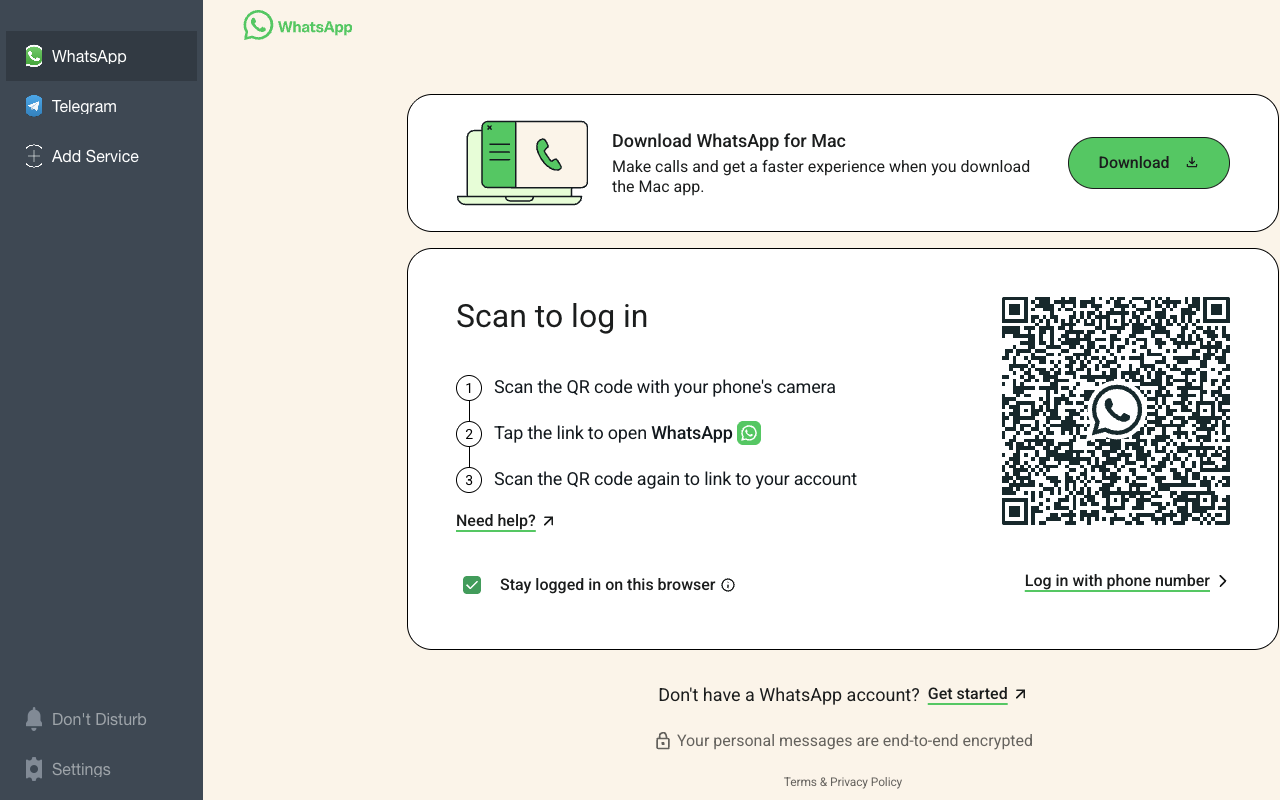
Octo is a desktop app that puts all my messengers in one window: WhatsApp, Telegram, Slack, Discord, Gmail and whatever else I pin, each in its own tab with its own unread counter. It runs on macOS, Windows and Linux.
It started in 2019 as a fork of Rambox, which is a great project. I wanted a smaller version of it: no accounts, no sync backend, no paid tier, no analytics. The first weeks were mostly deleting code. After that it became a slow maintenance diary, one Electron upgrade a year, plus whatever broke in between.
The code is on GitHub: Techblogogy/Octo. It’s GPL-3.0, as the original was.
How it works
Each service is an Electron <webview> running in its own persistent session partition. That one
detail gives you most of the features for free. Cookies and storage never leak between tabs, you can
be logged into two accounts of the same service, and restarting the app keeps you signed in.
autoEl: {
  tag: 'webview',
  src: me.record.get('url'),
  partition: 'persist:' + me.record.get('type') + '_' + me.id.replace('tab_', ''),
  useragent: Rambox.ux.WebView.userAgent(service),
  preload: Rambox.ux.WebView.preloadPath(),
}
The preload script runs inside each page and does the one job a messenger wrapper really needs: it reads the unread count from the page and reports it back, so the tab badge and the dock badge stay in sync.
The UI is Ext JS, which is an unusual choice in 2025. I kept it because rewriting a working UI is the easiest way to never finish a side project. I did stop using Sencha Cmd: the app now runs its Ext JS sources directly, and the theme compiles with dart-sass. That removed the most fragile part of the build.
The one bug worth telling
In early 2025 WhatsApp and Outlook stopped loading. There was no error, just a page telling me to update my browser. The cause was a user agent string I’d pinned years ago to keep some service happy. By 2025 that “modern Chrome” was six years old, and the services quietly refused it.
The fix was to stop pretending. Octo now sends the real Chromium user agent with the Electron and app tokens stripped out:
userAgent: function (service) {
  if (service && service.get('userAgent')) return service.get('userAgent');
  return navigator.userAgent.replace(/ ?Electron\/\S+/i, '').replace(/ ?octo\/\S+/i, '');
}
Lesson learned: a hard-coded version string is a time bomb, and it goes off years after you’ve forgotten it’s there.
What’s next here
The plan for this blog is simple: write about the things I build, with the code and the mistakes included. Next up is a Postgres setup on a tiny k3s cluster, which I’ve been poking at this month.